The Woman Who Cut the Peach
A Saturday farmers market, a grower who cut a peach and handed it over before anyone asked, and what food sovereignty looks like when it fits in a parking lot.
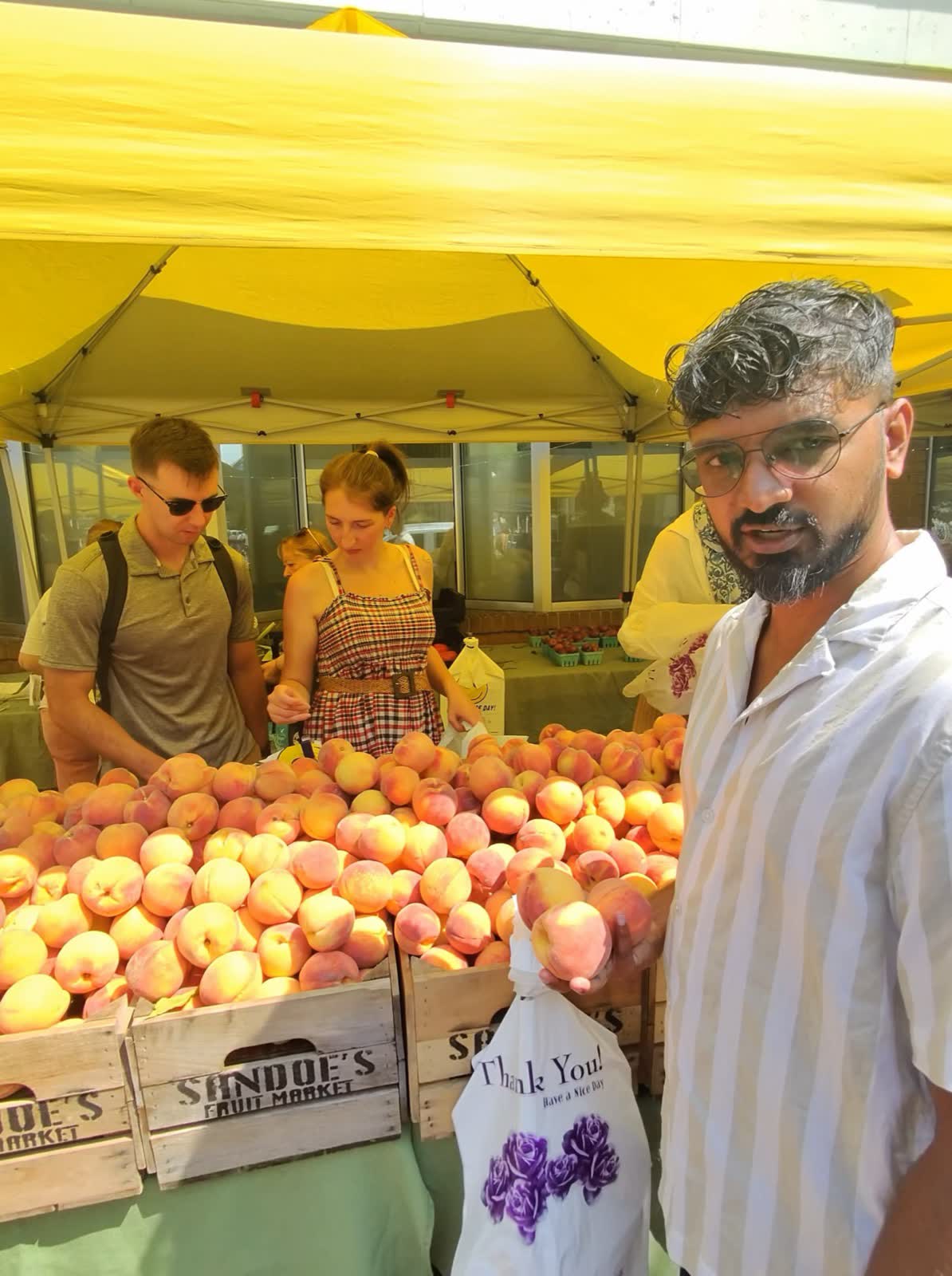
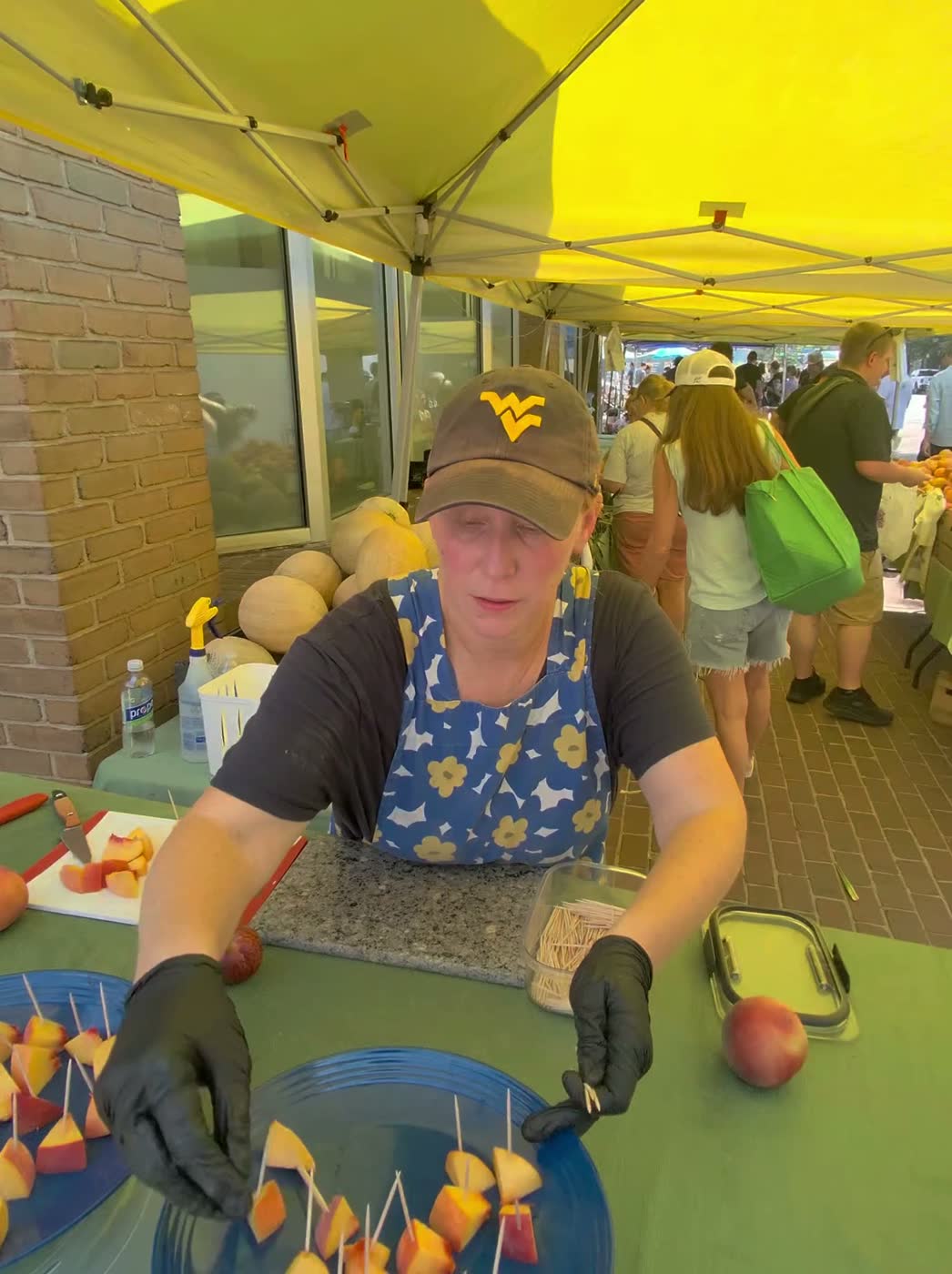
The woman under the yellow tent cut a peach without looking at it. Knife in one hand, fruit in the other, eyes on the customer she was talking to, and she slid a slice onto a skewer and held it out before anybody asked. The customer took it. Forty seconds later she was buying a crate.
I stood there with the glasses recording and let it play out, and I thought: this is what food sovereignty looks like. Nobody pitched anybody. She grew it, she cut it, she handed it over. That was the whole transaction. The trust came first and the money followed it.
When the line thinned out I asked her the only question I really came with. How did you get into farming?
She did not have to think about it. Her father did it. His father did it. His father before him did it. Not because anybody had a vision, she said. Because out where they were there was nothing else to do, so they worked the ground, and the ground worked. That is what it turned into over the generations. A farm, a name on a sign, and a woman cutting peaches under a yellow tent who never once called it a career. Her kids will most likely do the same. She said it the way you say the sun comes up.
I have spent my whole life around men who had to invent themselves from nothing, myself included. She inherited hers. Four generations of the same dirt handed down like a last name. That is what legacy looks like when nobody interrupts it. I stood there thinking about how many families like mine never got the first generation.
What a working food system looks like
I walked that Saturday market on purpose. Not to shop, to watch. I wanted to see what a working food system looks like when it fits in a parking lot.
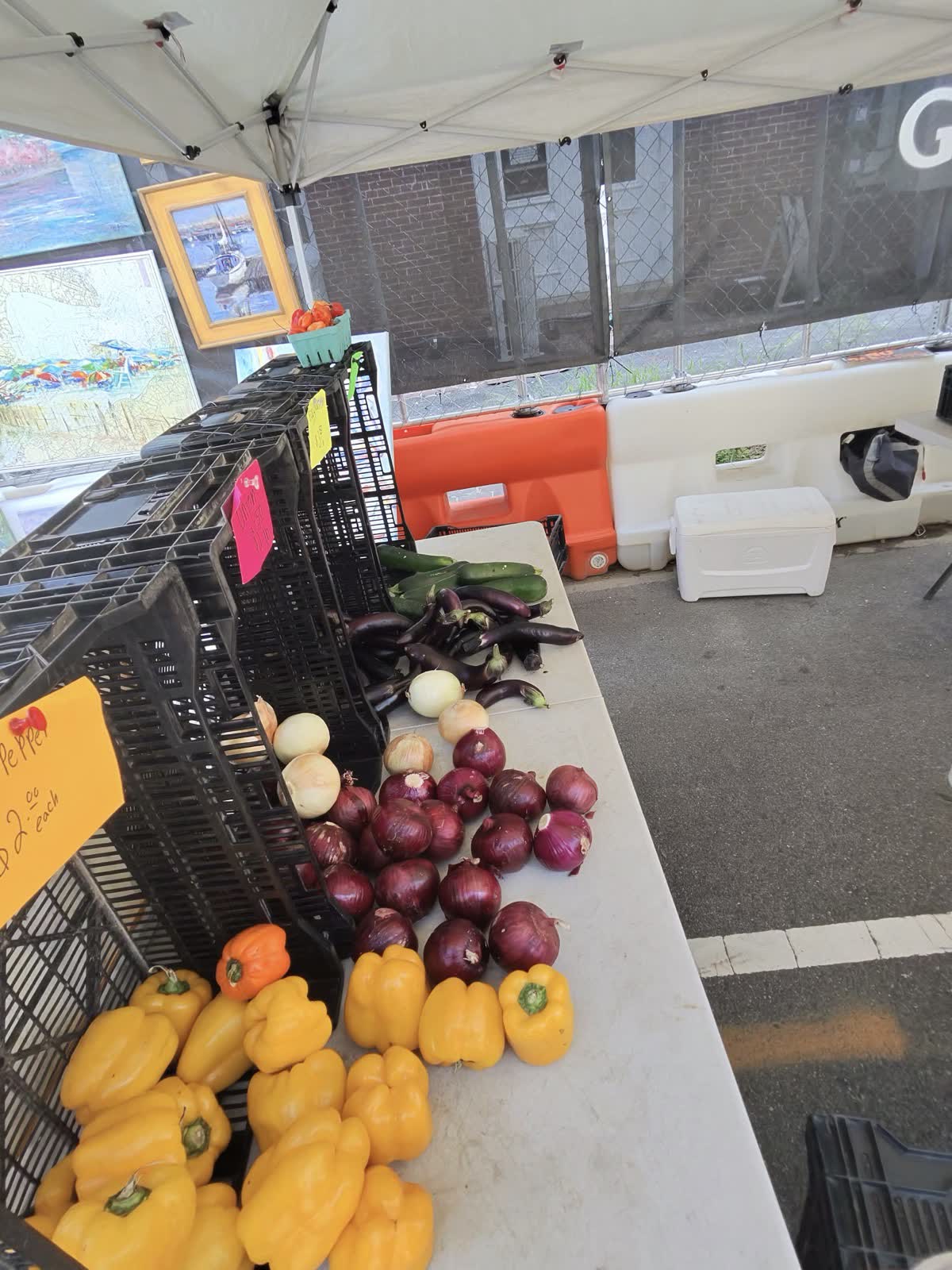
It looks like Lopez Farm driving up from the Northern Neck of Virginia with watermelons stacked on plywood and corn still in the husk. It looks like pint boxes of blueberries lined up in rows so straight you could check them with a level. It looks like tomatoes and peppers on a folding table with a hand-lettered price sign, and a grower behind them who could tell you which bed they came out of.
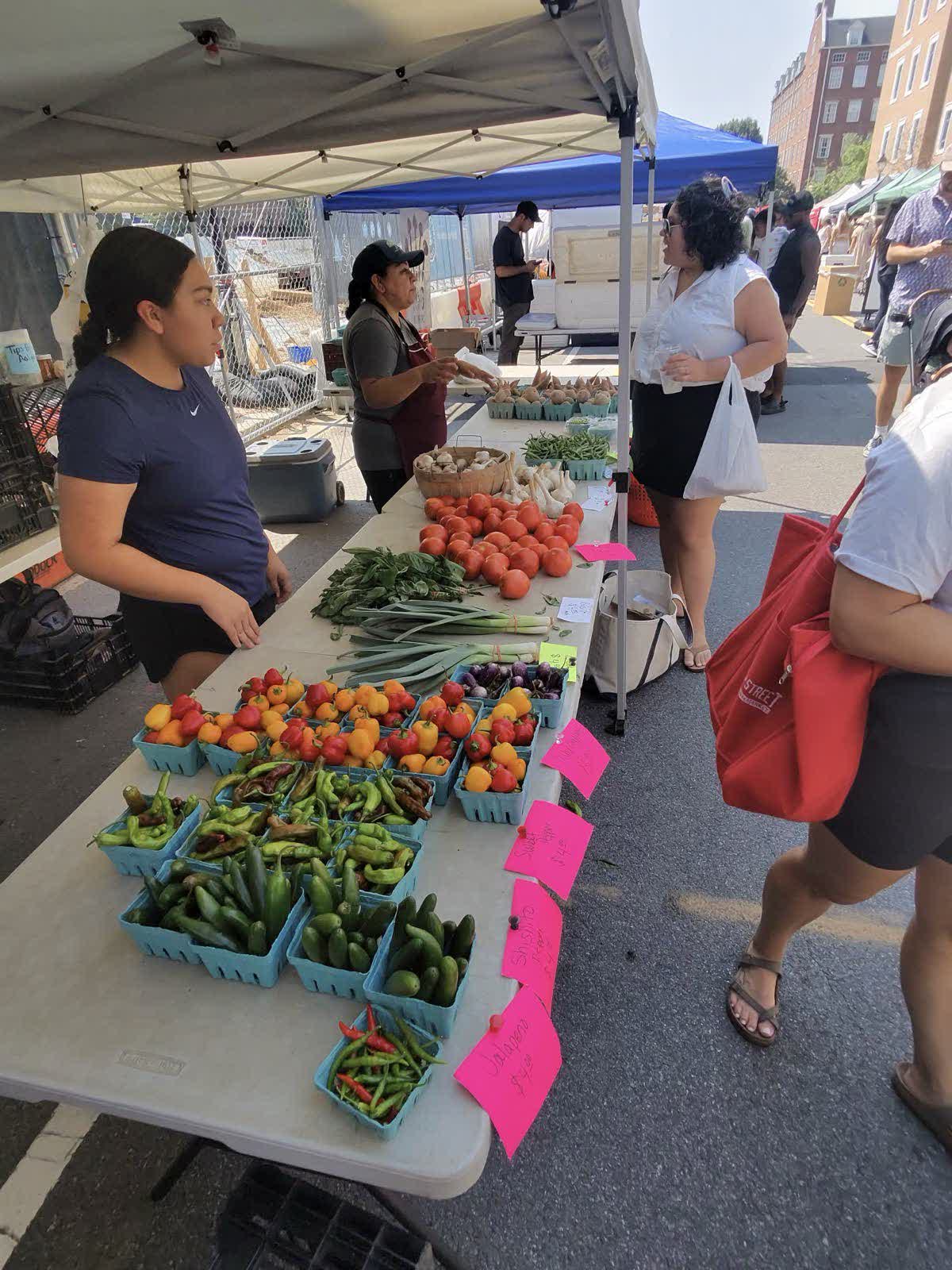
Every dollar I watched change hands went into a hand I could see. No warehouse. No middle. No “sourced regionally.” Grown, driven, sold, done.
I look at systems like that and I draw my own on top of them. I have a working picture of what the Sovereign Soil food system will be, and it is never finished. Every farm I walk and every market I stand in, I go home and move something. Who grows. Who sells. Where the money lands. What comes off the table and goes back into the ground.
I do not have land yet. Most people would call that the problem. Right now it is the advantage. A man with land has to live with his mistakes. I get to erase mine on paper as many times as I want, for free, until the plan is worth the dirt it will eventually stand on. That is not a consolation. That is the work of this season, and I take it as seriously as a harvest.
I have even been turning over a food systems degree at Rutgers. Not for the paper. Because I want the whole map in my head, seed to sale to soil, before I ask anybody to trust me with a bed.
The grocery store sells you distance
Here is what a supermarket sells you that a farmers market does not: distance. The peach in the store came off a tree nobody in the building has seen, was picked hard so it would survive a truck, and sat in a cooler until it looked ready. It is a picture of a peach. The one the woman cut for that customer was picked this week, and she could tell you the tree.
That distance is not just about flavor. It is about who holds the knowledge and who holds the money. In the store, the grower is invisible and gets the smallest slice of the price. At the tent, the grower is the whole supply chain and keeps the whole sale. Same fruit. Completely different system.
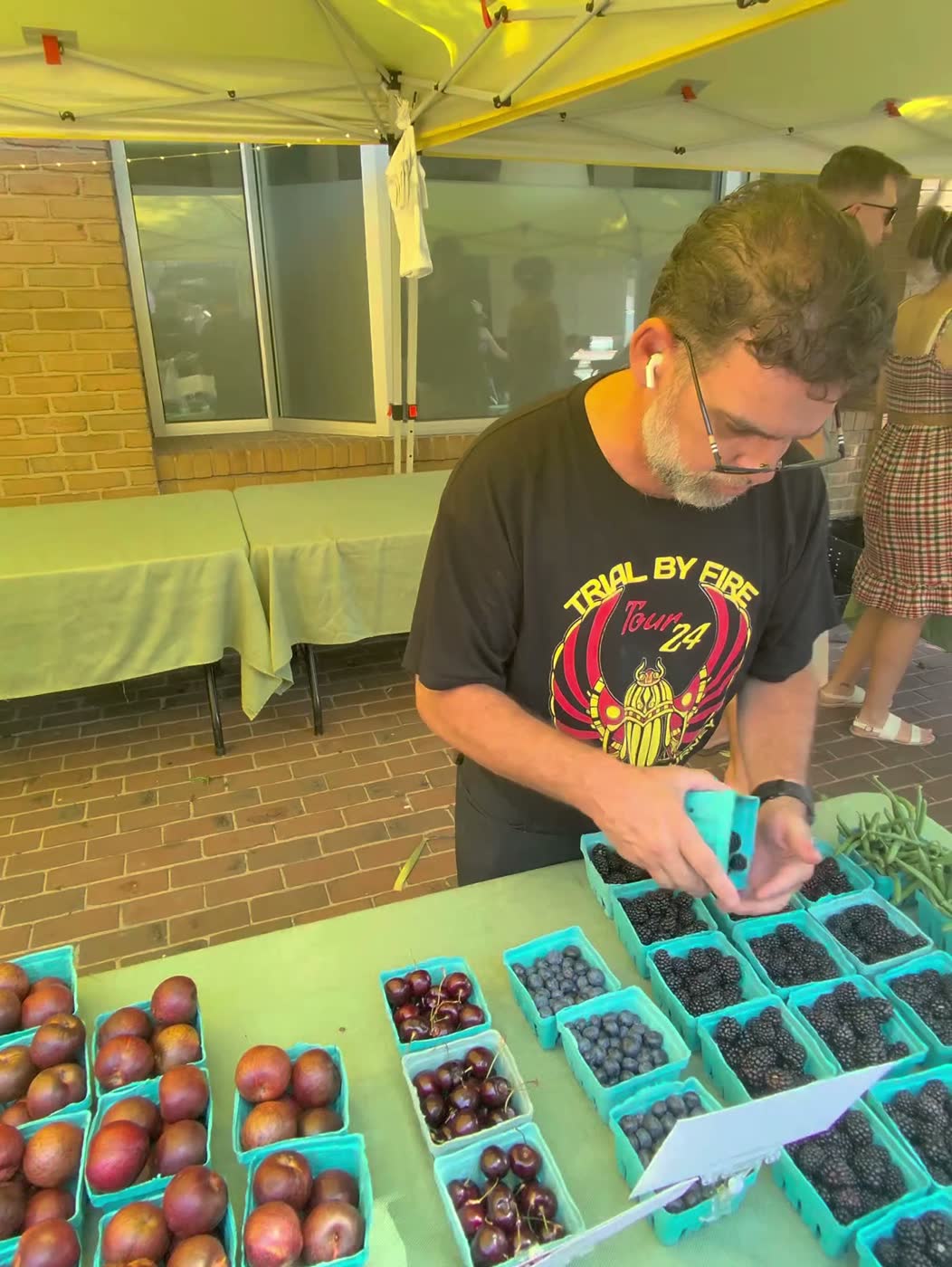
I am not telling anybody to boycott a supermarket. I shop at one. Five years ago my daughter Michaela was born, and that was the first time I really looked at where my food came from. Four years ago the twins came, Arya and Asha, a little over nine months behind their sister. Three kids in nine months. I call them my Irish triplets. With everything happening with food in this country, that is when I stopped looking and started changing. I began buying produce local. I wanted to know the hand it came from. That was not a lifestyle. That was three kids and a father who did not want to guess.
I also know that mindset is a privilege. Not everybody has the time, the money, or a market within reach, and I am not going to pretend otherwise.
Here is the part that gets me. What the supermarket also sells is the illusion of freshness. A sign that says FRESH over a bin of fruit that has been traveling for a week. In the inner city there is no alternative down the block and nobody teaching the difference, so we take the label at its word. We were never given a reason not to. That is not ignorance. That is the absence of options doing exactly what it was designed to do.
Supermarkets are not the enemy. They feed millions and they are not going anywhere. But their produce should come from the ground closest to the store, and the people in the aisle should be able to find out where. That is not a radical ask. That is a peach that tastes like a peach.
Why I care
I grew up in the South Bronx where the closest thing to a farmers market was the produce shelf at Pioneer Supermarket, and the produce was an afterthought. Food showed up in boxes from somewhere. Nobody I knew grew anything. That is not an accident of geography. That is how the system was drawn, and who it was drawn around.
Neighborhoods like mine did not lose their farms. They never got them. The land, the knowledge, and the sale all sat somewhere else, and what came back to us was whatever survived the trip. When people say “food desert,” this is what they mean, and it did not happen by itself.
So when I say Sovereign Soil Collective is about food sovereignty, this is the picture in my head. Not a slogan. A tent, a table, a grower, a neighbor, and a peach that never saw a truck stop. The people who tend the land owning the food, the knowledge, and the sale.
Four things I watched growers do right
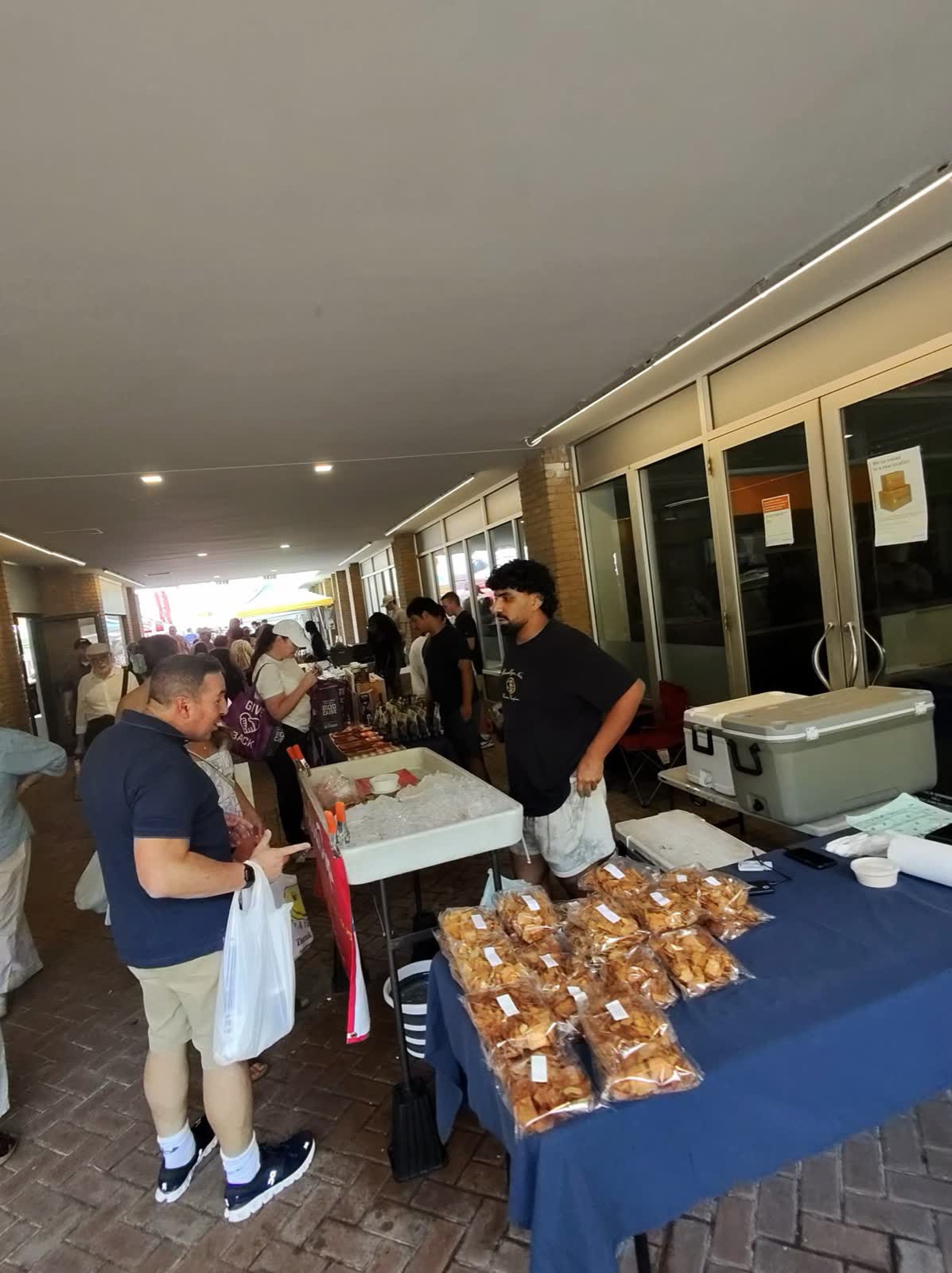
I took notes. These are the habits that made money move at that market, and they are the habits I am building into Sovereign Soil from day one.
1. Give the taste before you ask for the sale. The woman with the peach did not explain her fruit. She handed it over. Every stand that was busy did some version of this. Trust first, then the transaction.
2. Know your product to the bed. “Which tree?” “Which row?” Every grower I asked had an answer without looking anything up. That knowledge is the product. The fruit is proof.
3. Say where it came from, out loud. Lopez Farm had “Northern Neck, VA” hand-painted on the sign. Nobody hid behind “local.” They named the place, and people trusted the name.
4. Let the neighborhood sell for you. Half the crowd at the busiest tents was talking to each other, not to the vendor. A market is a community first and a store second. The vendors who understood that were the ones with the line.
It is not only produce
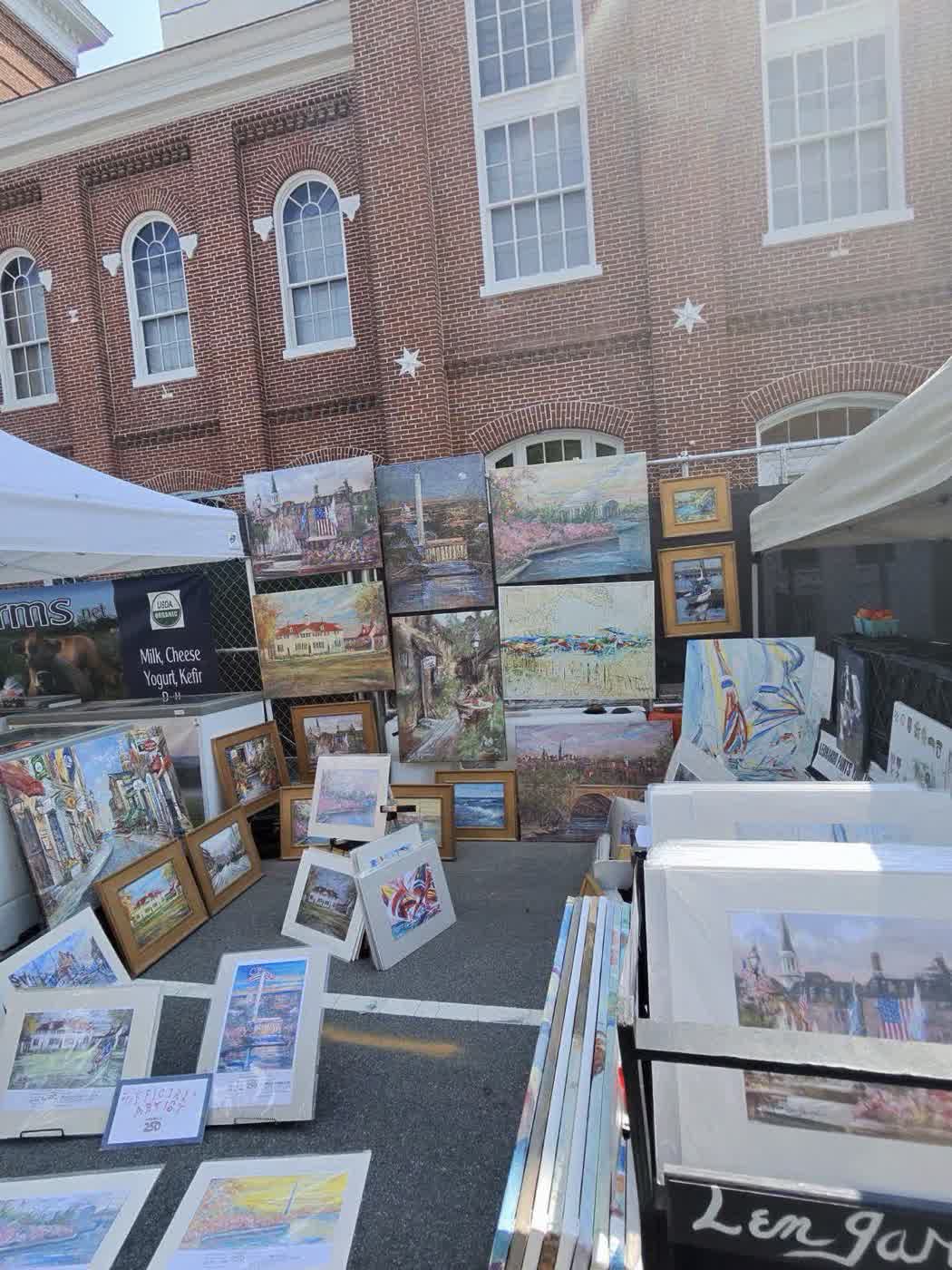
Between the food tents were the makers. A local cidery pouring tastes. A painter selling prints of the same brick streets we were all standing on. Candles, bread, baked goods still warm. That matters, because a market that is only vegetables is a farm stand. A market with makers is an economy, and every dollar spent there stays in the neighborhood a lot longer than one spent at a chain.
That is the other half of food sovereignty that people skip. It is not just growing food. It is a community owning the whole table, food and craft and the money that moves across it.
How to walk a market like you mean it
If you have never gone, or you go and leave with a bag of tomatoes and no conversation, try this next Saturday.
- Go early. Before ten you get first pick and the growers have time to talk.
- Ask one question per stand. “How was this grown?” is enough. Watch who lights up.
- Buy one thing you have never cooked. Then ask the grower how they cook it. That is a free class.
- Bring cash and a bag. Small vendors lose a cut on cards, and you will fill the bag.
- Learn one name. One grower, one farm, one place. Next week you will have two.
That is the whole practice. It is not complicated. It is just closer.
What I took home
A bag of peaches and plums, fresh squeezed juice, two loaves of artisan bread, candles, a bottle of hard cider, a plan, and a standard. When Sovereign Soil’s first beds come in, this is the bar: the person who grew it is the person who hands it to you, and they can tell you how. The taste comes before the sale. The place is on the sign. And the neighborhood does the rest.
The woman under the yellow tent did not know she was setting my standard. She was just cutting a peach. That is usually how it works.
Follow the build. The first seeds go in soon. 🌱
Brian M. Forbes
Founder of Sovereign Soil Collective, a veteran-owned and Black-owned regenerative farm institution in New Jersey. U.S. Army veteran, federal healthcare executive, South Bronx-born, husband and father of four daughters. Writes as The Miseducated Blk Man.
About the founder Instagram